
Carteret County Multi-Day Arrest Log
The county publishes no separate 72-hour, weekly, or monthly booking blotter. Instead, the official inmate portal handles multi-day needs. It shows current inmates plus an “Over the last number of days” control. The form defaults to five days and accepts a short custom range. That covers several recent days of Carteret County arrests. It is no permanent archive, however. A wider window catches entries a one-day search might miss. It cannot rebuild a released person's full history, though. The roster shifts after bond, transfer, correction, or release. The Sheriff's public page promises no fixed refresh schedule or weekend cadence. It also promises no booking photo for every entry.
Read Carteret Arrest Records by Date
Start with the official current source. Then work outward toward slower, less authoritative sites, keeping every date's meaning clear at each step, since a publisher's post date can differ from both the arrest and the booking.
- Open the Sheriff's Inmate Search page and enter the live portal.
- Use the recent-day control for the needed short range, then compare the current all-inmate view.
- Note the arresting agency, booking date, retrieval time, and any displayed identifier without treating the charge as a result in court.
- For a missing older entry, request the existing report from the Sheriff. For a final case outcome, use eCourts and the Clerk.
The 24 Hour Arrests page covers the shortest official query. It focuses on one day only. This page instead tracks several days, delayed publication, outside sources, and archives, so the two windows are not duplicate feeds.
Carteret Arrest Timeline Fields
No Carteret arrest-log entry promises every field. Still, these labels matter when you compare the official portal, news coverage, and secondary sites.
| Field | How to interpret it |
|---|---|
| Arrest date | When an agency says the arrest occurred. |
| Booking date or time | When jail intake was recorded, if the source displays it. |
| Arresting agency | The Sheriff, a town police department, or another agency, not necessarily the jail operator. |
| Charge as booked | The intake charge, not a conviction or final disposition. |
| Publisher date | When a news outlet or unofficial index posted its item. |
| Retrieval date | When the visitor actually viewed a changing page. |
| Court event date | A later docket event that may change how the case is understood. |
The portal landing screen lets you search by name, all inmates, charge description, all charges, or recent days. It sets no universal photo rule. Bond needs equal care. A displayed bond belongs to the booking or custody snapshot, not a promise of release or a case outcome. Magistrates or courts can change the amount. Sources sometimes disagree. When they do, record each source and its retrieval time rather than trusting the newer-looking card. Jail and court offices settle current status.
Many Agencies Feed Carteret Bookings
Carteret County Detention Center is the county's only jail. Plenty of agencies can still land a person there. A countywide index may tag an entry with an arresting agency. The label could read Carteret Sheriff, Morehead City, Beaufort, Newport, Atlantic Beach, Emerald Isle, Cape Carteret, Pine Knoll Shores, or another agency. That label names the arresting body. The city does not run the roster. A city arrest can end with a citation instead of a CCDC booking. It can also end with a magistrate-level bond. When someone is booked, keep both facts. Note which agency made the arrest and which facility received the person. The official Detention Center page identifies CCDC and explains its county role. City filters on unofficial indexes are not municipal police logs. A card labeled Morehead City or Newport may just reflect the publisher's own classification. It shows no city endorsement. The city did not supply every field or operate the detention center. For a city incident report, use that police department's records route. For a jail booking, go through CCDC and the Sheriff.
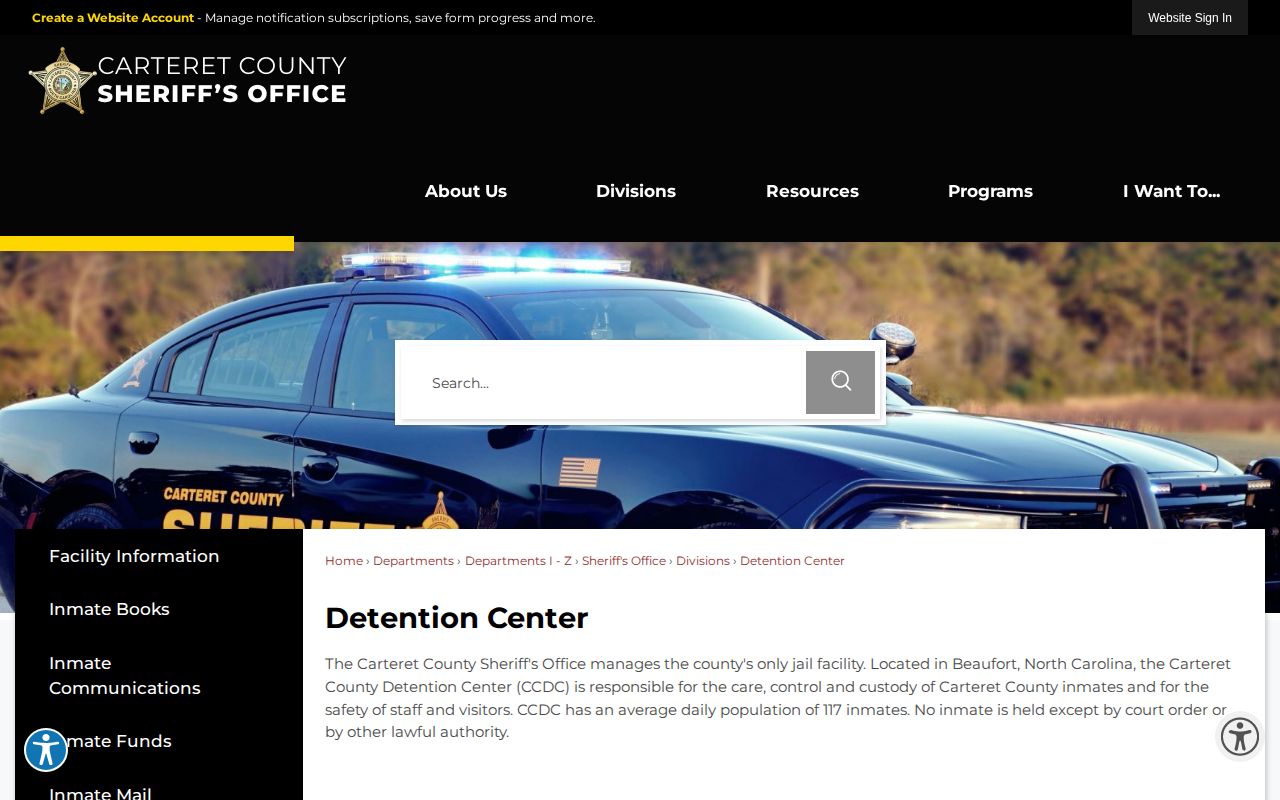
The official Detention Center page anchors the multi-agency log to CCDC. It displays no gallery of people.
Five Clocks in Carteret Arrest Reports
A booking can happen well before a news report. The same goes for an unofficial index post or a later eCourts entry. A story date only shows publication. An aggregator's “posted” or “updated” label may reflect its own index time. A retrieval date just marks when a changing page was viewed. Neither should replace the arrest or booking date. Use the NC eCourts Portal to find later case activity. Confirm the court record with the Clerk. A disposition is the case outcome. It may show dismissal, reduction, plea, trial, or diversion. It could also show another resolution an old booking card cannot display. The Carteret court page is the clear official stop for disposition follow-up.
Carteret Arrest News Is Case-Specific
Newspapers and TV stations cover crime in Carteret County, but none of them operates the county arrest log. WITN Crime is one outlet worth a look. So is the News-Times. Neither publishes bookings on any schedule. A WITN story may quote deputies or carry an image the Sheriff's Office supplied for that one case. That tells you about a single arrest. It does not tell you the county posts booking photos as a matter of routine.
Follow-up reporting can add useful background. Still, the CCDC record governs who is actually in custody, and the court file controls how a charge moves forward. If a story later moves or slips behind a paywall, your verification path does not break. A news report is a lead, not the record.
The local News-Times section works as a general news feed rather than a daily blotter. Treat it that way. Gather context from the outlets, then return to the sheriff and the courts for the true status of any Carteret County arrest.
It is a news feed, not a live booking roster.
Unofficial Carteret Arrest Indexes
Official sources come first in Carteret County. RecentlyBooked and Mugshots.zone are third-party publishers, not county records. Both list local bookings across several days. Neither speaks for the jail. Entries can sit online long after the official roster changes, and their date labels and photos belong to the publishers rather than to Carteret County.
RecentlyBooked offers a rolling thirty-day view. Mugshots.zone keeps monthly archives reaching back years. Neither feature makes a site the official county archive. Cross-check any useful lead against CCDC, the Sheriff, and eCourts before drawing a conclusion.
Similar publishers such as Arrests.org, BustedNewspaper, and Mugshots.com list names, dates, alleged charges, bonds, and photographs, but those fields follow each site's own indexing habits and disclaimers. Keep every one of them secondary. Never treat a publisher's page count as a measure of Carteret arrest volume. The RecentlyBooked Carteret page shows what a caution-worthy multi-day index looks like.
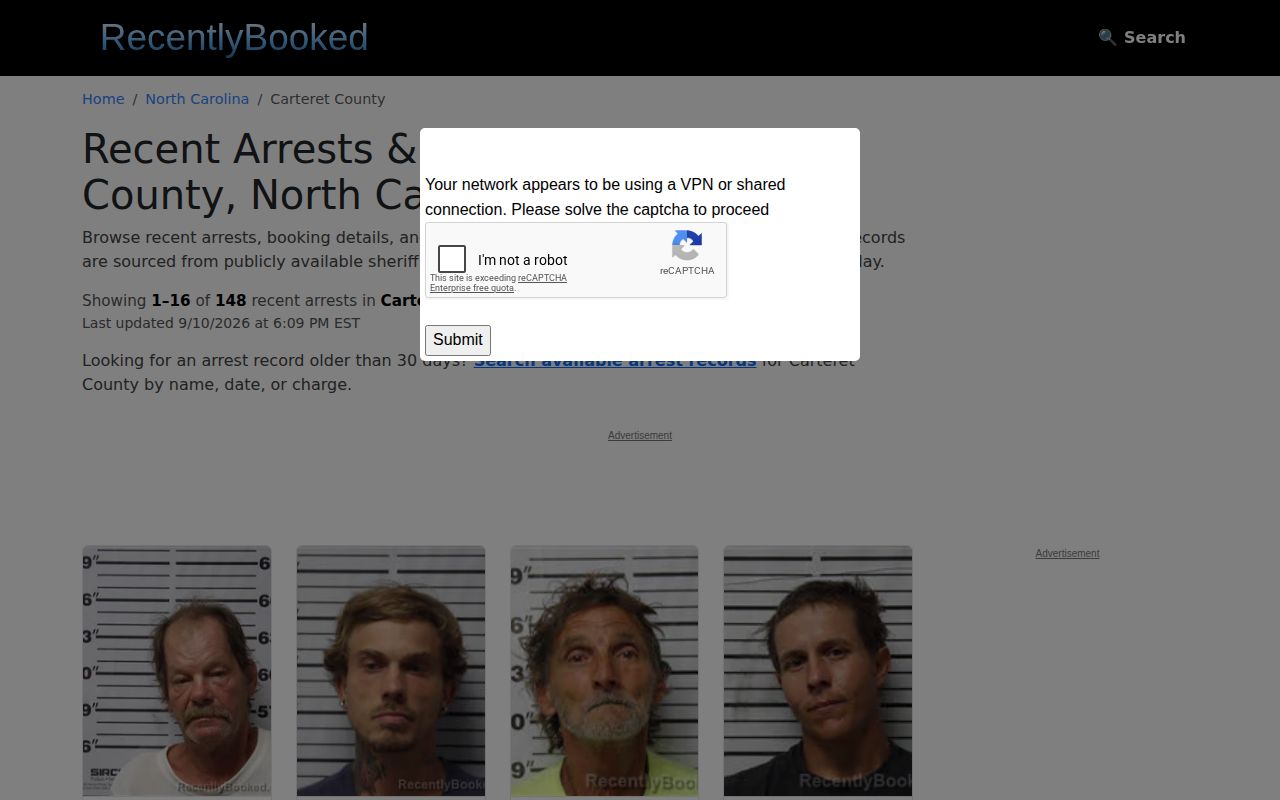
The publisher page appears for recognition only. Its cards do not show current Carteret County custody.
Request Older Carteret Arrest Records
The live roster is not an archive. North Carolina sets retention rules by record series. Arrest-processing tracking records carry a one-year instruction. Arrest reports left out of a case file can be kept five years. Inmate entry and release summaries are slated for destruction three years after release or transfer.
Those periods guarantee nothing about a specific record. A felony or misdemeanor case may follow a different schedule once the report, photo, warrant, and disposition enter the case file. Material kept for permanent value can land in the State Archives county-records guide.
Call the Sheriff Records Division first. The number is 252-728-8400. Ask for a person, dates, agency, and record type. If a case number exists, request the court file from the Carteret Clerk. Then try State Archives finding aids. A web archive never proves the county still holds the original.
The schedule also lists weekly inmate reports to the Clerk, kept until superseded or obsolete. Daily bulletins may be destroyed sooner. Those are not booking reports. Ask the custodian which series holds your item and whether it joined a case file. That answer beats the age of any web result.
Search Public Records
Search again after distinguishing the source, agency, date type, and custody status.
Sponsored Results